
GREEN CABINET SOURCE / VERIFIED PATH
Repair, Refinish, Reface, or Replace Kitchen Cabinets?
A worn kitchen does not always need new cabinets. Peeling paint, loose hinges, sticking drawers and a layout that no longer works are different problems,…
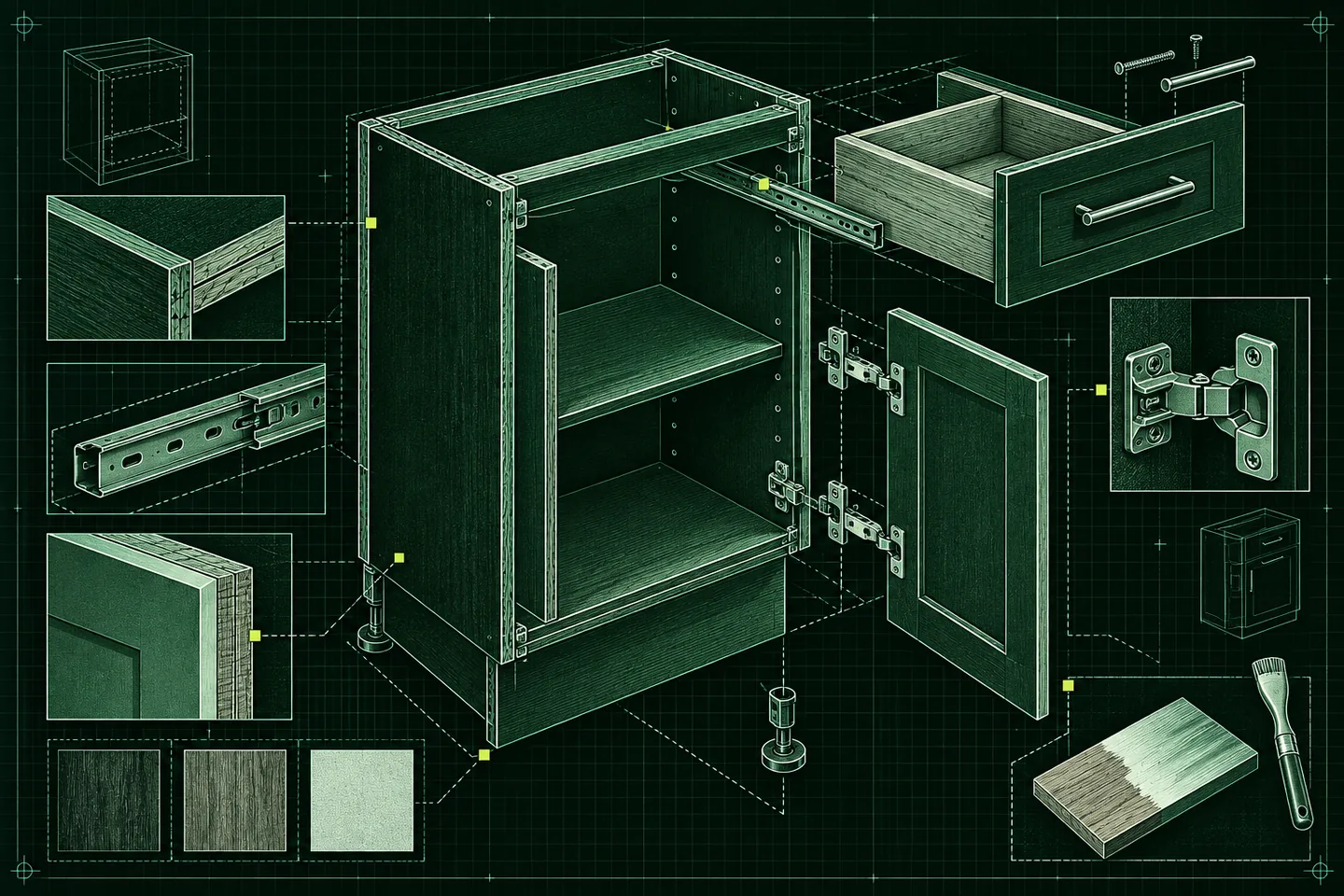
A worn kitchen does not always need new cabinets. Peeling paint, loose hinges, sticking drawers and a layout that no longer works are different problems, and each points to a different intervention. Before deciding whether to repair, reface or replace cabinets, separate what you can see from what is holding the kitchen together.
Start with the cabinet boxes: the sides, bottoms, backs and joints that support doors, drawers, shelves and countertops. If they are dry, sound and securely mounted, keeping them in service may avoid removing a substantial amount of material. If they are badly damaged, a fresh finish or new doors will only conceal the problem. The useful question is not simply “Can these cabinets be reused?” It is “Which components can reliably serve the kitchen we need?”
Inspect the cabinets before choosing a treatment
Empty a representative base cabinet and wall cabinet, then remove drawers so you can see their runners and the box interiors. Look under the sink, beside the dishwasher, around plumbing penetrations and along the toe kick. Check for swelling, soft material, separated joints, staining and musty odours. A dry mark from an old spill calls for a different response than an active leak or a cabinet bottom that has lost its strength.
Open every door and drawer. Note whether a hinge merely needs adjustment, whether its screws still grip the cabinet, and whether a drawer sticks because of a worn slide, a damaged drawer box or a racked cabinet. Look at finish wear separately: a scratched door can often be treated without changing a sound box. Finally, ask whether the existing layout gives you adequate access, storage and working space. Refacing can change appearance, but it generally preserves cabinet locations and dimensions.
This component-by-component approach echoes the distinctions in the Kitchen Cabinet Manufacturers Association’s description of cabinet performance, which treats structural integrity, door and drawer operation, and finish quality as separate areas. Its testing categories are a useful way to organise an inspection; they are not a substitute for assessing the condition of cabinets already installed in a home.
Check each component
- Boxes and joints: Check sides, bottoms, backs and corners for swelling, sagging, splitting or movement. Sound boxes can support repair, refinishing or refacing; widespread weakness may call for replacement.
- Wall mounting: Look for gaps, movement, loose fasteners and damaged fixing points. Have uncertain support assessed before the cabinet is loaded or covered.
- Water-exposed areas: Check around sinks, dishwashers and pipes for active moisture, softened panels, odours and recurring stains. Fix the source before deciding what to keep.
- Doors and fronts: Check for warping, loose joints and damaged edges. Repair isolated faults; consider refacing when many fronts need changing but the boxes remain sound.
- Hinges and drawers: Test movement, alignment, screw grip, runners and drawer bottoms. Adjustment or a targeted repair may restore function.
- Finish and layout: Separate surface wear from storage, access and clearance problems. A new finish cannot change cabinet placement.
Record findings cabinet by cabinet. One failed sink base does not condemn every wall cabinet, while attractive doors do not make a swollen box worth retaining.
What each option actually changes
Repair and refinish
Repair is the narrowest response: adjust a hinge, replace a slide, secure a sound joint, mend a drawer or replace one damaged component. Refinishing changes the existing visible surfaces through preparation and a suitable new finish. The two can work together when the kitchen functions well and the wear is local or cosmetic.
This approach keeps the greatest share of the existing cabinetry in place, provided the underlying material is serviceable. Habitat for Humanity describes paint and new hardware as ways to give an old cabinet a longer useful life. That is a useful possibility for a sound cabinet, not a remedy for moisture damage, failing joints or unsafe mounting. Surface preparation and finish compatibility also matter: coating a weak or contaminated surface does not restore it.
Reface the doors and drawers
Refacing keeps the existing cabinet boxes and changes the visible faces, typically with new doors and drawer fronts and a coordinated treatment for exposed frames or end panels. Hinges, pulls and other hardware may also change. It suits a kitchen whose boxes are stable and whose basic layout works, but whose fronts are damaged, difficult to refinish or no longer the desired style.
Refacing still introduces new materials and leaves removed fronts to be reused, recovered or discarded. It may also reveal fit problems that need planning: door clearances, drawer-front spacing, appliance openings and the condition of exposed edges all affect the result. Ask exactly which parts will stay and which will be removed. A proposal described as “refacing” should not leave a failing drawer box or water-damaged cabinet bottom untreated.
Replace cabinets
Full replacement removes the existing units and allows a different configuration of cabinet boxes, doors, drawers and storage. It becomes the stronger option when damage is extensive, mounting cannot be made sound, or the present layout cannot support the kitchen’s intended use. Replacement also creates more demolition material and requires more new cabinetry than a repair or a straightforward refacing project.
That does not mean every removed part has to become waste. Sound doors, hardware or whole cabinets may have a reuse route if they can be removed without damage and someone can use them. The US Environmental Protection Agency’s guidance on construction and demolition materials favors preserving existing structures and salvaging usable materials where practical. Applied to a kitchen, that supports a careful inventory before removal, while leaving room to replace components that cannot safely continue in service.
Pause when moisture or mounting is uncertain
Do not choose a finish or order replacement fronts while water is still entering a cabinet. Trace the source and establish the extent of damage first. A musty odour with no visible source, a history of repeated leaks or staining that continues behind the cabinet can indicate a problem beyond the surfaces you can inspect. The EPA’s homeowner guidance on moisture and hidden mold advises fixing the water problem before considering cleanup complete and consulting an experienced professional when hidden growth is suspected.
Likewise, a wall cabinet that shifts, pulls away from the wall or has damaged mounting points needs a qualified installer or other appropriate professional to assess its support before it is reused or loaded. A cosmetic treatment cannot verify the wall or fasteners behind it. If an inspection exposes a hazard or concealed damage, settle that question before comparing the appearance of the available options.
A worksheet for the final decision
Use the same questions for every cabinet run. Write down uncertain findings rather than treating them as sound:
- Are the boxes serviceable? List any swollen, soft, sagging or separated parts. Identify whether damage is isolated or repeated across the kitchen.
- Are moisture and mounting resolved? Record leaks, odours and loose installations, along with who will assess them. Pause cosmetic decisions where the answer is unknown.
- Does the layout work? Note the specific storage or access problem. Ask whether an interior fitting or one cabinet change would solve it before redesigning the entire room.
- Which visible parts need change? Count doors, drawer fronts, exposed ends and frames that require repair, refinishing or replacement.
- What will each option remove? Compare the actual components in each proposed scope. Ask how usable parts will be protected for reuse and how remaining material will be handled.
If the boxes are sound, the installation is secure and the layout works, start with targeted repair or refinishing. If those same boxes are worth keeping but the fronts are the main problem, examine refacing. If the boxes cannot reliably support continued use, or keeping the layout would perpetuate a serious functional problem, plan replacement of the affected units and assess whether the rest can remain.