
GREEN CABINET SOURCE / VERIFIED PATH
Where Can Old Kitchen Cabinets Go? A Reuse and Donation Checklist
Sound cabinet boxes may work in another room or kitchen; doors, drawers and hardware may be useful even when a box is not. Decide what can be reused…
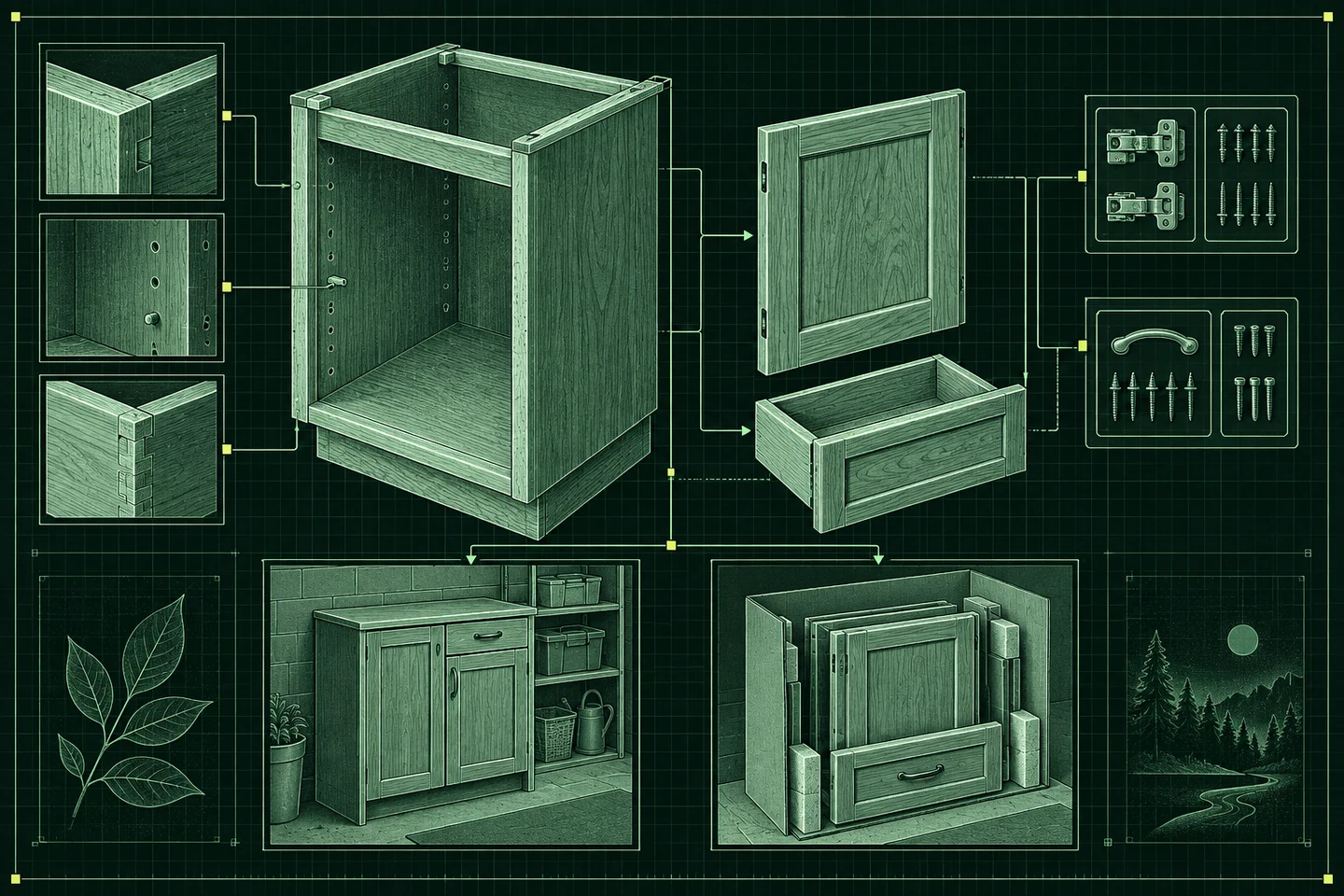
Sound cabinet boxes may work in another room or kitchen; doors, drawers and hardware may be useful even when a box is not. Decide what can be reused while the kitchen is still assembled, when you can inspect, measure and photograph each unit.
If you want to donate old kitchen cabinets, begin with an inventory and a call to the receiving organisation. The U.S. Environmental Protection Agency lists cabinets among the building components handled by reuse centres, but that describes a possible route, not acceptance by any particular centre. EPA’s guidance on construction material reuse also emphasizes careful removal so useful components remain available for another use.
1. Sort the kitchen before removal
Separate pieces into intact units, usable parts and material too damaged for reuse. Do this before removal: broken boxes or mixed-up hardware are harder to offer as a complete set.
For each cabinet box, look for a firm back and base, sound corners, secure joints and shelves that still sit properly. Check beneath the sink and around appliances for swelling, soft spots or water damage. Open every drawer; note sticking runners, missing fronts and damaged bottoms. A worn finish may still be acceptable to a particular recipient, but structural damage, persistent odours, visible mould or pest evidence needs to be disclosed and may rule out donation. Keep questionable pieces apart from clean ones rather than describing the entire kitchen as “good condition.”
Next, count doors, drawer fronts, shelves, hinges, pulls, mounting rails and any removable trim. Label each part with the box it belongs to. Put screws and small fittings in labelled bags, then secure each bag to its matching unit or keep all bags together in a clearly marked container. If a piece is missing, record that now. Completeness matters to a recipient who must reinstall the cabinets, and it may determine whether a donation centre can take them.
2. Measure and document what someone can actually use
A photograph of the whole kitchen shows the style and layout, but a future user also needs dimensions. Measure each cabinet box’s width, height and depth. Record whether it is a wall or base cabinet, and note unusual features such as a sink cutout, an appliance opening, a corner shape or a finished end panel. Measure doors and drawer fronts separately if they might be offered on their own. A quick sketch showing which boxes sat together can explain a group of cabinets more effectively than a long description.
Take clear photographs of the fronts, interiors, sides and any damage before disassembly. Include one view of the entire run so a buyer or donation centre can understand how the pieces relate. Avoid hiding a swollen base or chipped edge behind an attractive front photograph. An accurate listing saves conversations that end when someone discovers the cabinets will not fit or are less complete than expected.
List the quantity of wall and base cabinets, doors and drawers, then give dimensions and condition by unit. Name materials only if you can identify them confidently. Do not guess whether a finish or board meets a particular standard.
3. Arrange careful removal
Tell the contractor, installer or helpers which units you intend to keep intact. Agree where they will be placed, how parts will be labelled and what to do if hidden damage appears. Empty each cabinet, identify its fixings, support it as fasteners are released and avoid prying against finished edges.
Kitchen removal can involve electrical work, plumbing, heavy countertops and cabinets fixed above head height. Have qualified people handle work outside your skills and keep others clear of unstable units. Stop if removal exposes an unknown material or a condition that could make the work unsafe. EPA notes that some construction and demolition materials can contain harmful constituents and that applicable handling requirements vary by jurisdiction. Its environmental considerations guidance is a reason to assess a concern before disturbing or passing on a suspect item.
After removal, keep cabinets dry, off wet ground and protected from knocks. Reattach or bundle matching doors so they cannot get separated. If a box comes apart during removal, update the inventory and photograph its new condition before offering it. The aim is a truthful handoff, not merely an orderly pile.
4. Reuse sound cabinets at home
The simplest destination may be another room you already use. A base cabinet can provide enclosed storage in a utility room or workshop; a wall cabinet may suit a laundry area; a narrow unit might help organize supplies in a pantry. Check the available space, door swing and wall or floor support before deciding. A cabinet that stood safely in one kitchen will still need suitable fixing and support in its new location.
Set aside units with a measured location and an installation plan. Offer the others while they are clean and easy to inspect. This follows EPA’s approach to salvaging building components for reuse.
5. Offer the remainder locally
Local resale, a direct giveaway and donation to a building-material reuse centre can all work for intact cabinets. A complete kitchen run may appeal to someone fitting out a small space, while individual boxes may be easier to place separately. Describe the units as they are: dimensions, quantity, condition, missing parts, whether they are already removed, and who would need to transport them. Include the photographs and inventory rather than asking interested people to infer details from one wide shot.
Donation is a possibility, not an automatic destination. Habitat for Humanity says its ReStores often seek kitchen and bathroom cabinets, but acceptance varies with local criteria, available space and existing inventory. Items must be reusable and resellable, without broken or missing parts. Some locations offer pickup for larger items, while others may not be able to accept or collect what you have. Check with the specific store before arranging removal or transport. Habitat’s ReStore FAQ sets out those local differences.
Habitat’s donation guide says kitchen and bath cabinetry should be complete and in good condition, with the necessary pieces and hardware. The cabinetry guidance is a useful screening point, but the local centre decides what it can take. Other reuse centres may have different criteria.
6. Ask the receiving centre the right questions
Send the inventory and photographs before loading a vehicle. A short, specific message gives staff enough information to assess the offer and tell you what they need clarified. Ask:
- Do you accept removed kitchen cabinets, and do you take single units as well as complete sets?
- What condition and completeness do you require for boxes, doors, drawers, shelves and hardware?
- Will you consider cabinets with disclosed wear, cutouts or minor damage? Which conditions rule them out?
- Do you need photographs and measurements before deciding?
- Must the cabinets be detached and ready to load, or is any removal assistance available?
- Is pickup available for this address and quantity, or should I arrange drop-off? How should the units be prepared for handoff?
Wait for an answer that covers your actual cabinets. A general website category is not confirmation that a store has room for your set. If timing is tight, make the calls before demolition is scheduled; the best destination is of little use if the units are broken up before arrangements are settled.
7. Give unsuitable material a separate plan
Not every cabinet can be passed on. Keep sound doors, shelves or metal hardware separate if someone can use them, but do not present a water-damaged box as a complete cabinet. Ask your local waste or construction-material service how it handles the remaining wood, engineered board, metal and other components. Recycling options depend on the material and the facilities serving your area; a recycling symbol or a wood appearance does not establish that a local program accepts the piece.
If a cabinet may be contaminated, identify the concern before sanding, cutting or putting it into a donation pile. Seek local guidance on handling and disposal where necessary. Separate general debris from material that may require special treatment, and make sure whoever removes it knows about the concern. The goal is to avoid transferring a disposal problem to a reuse centre or the next household.
Match each item on the inventory to a destination: reuse here, sell or give directly, donate after acceptance, or use the appropriate local waste route.