
GREEN CABINET SOURCE / VERIFIED PATH
Zero Waste Careers: Finding Meaningful Work in a Circular Economy

By Maeve Lin
Zero waste careers help prevent waste, extend product life and improve how materials are used. They span design, manufacturing, construction, procurement,
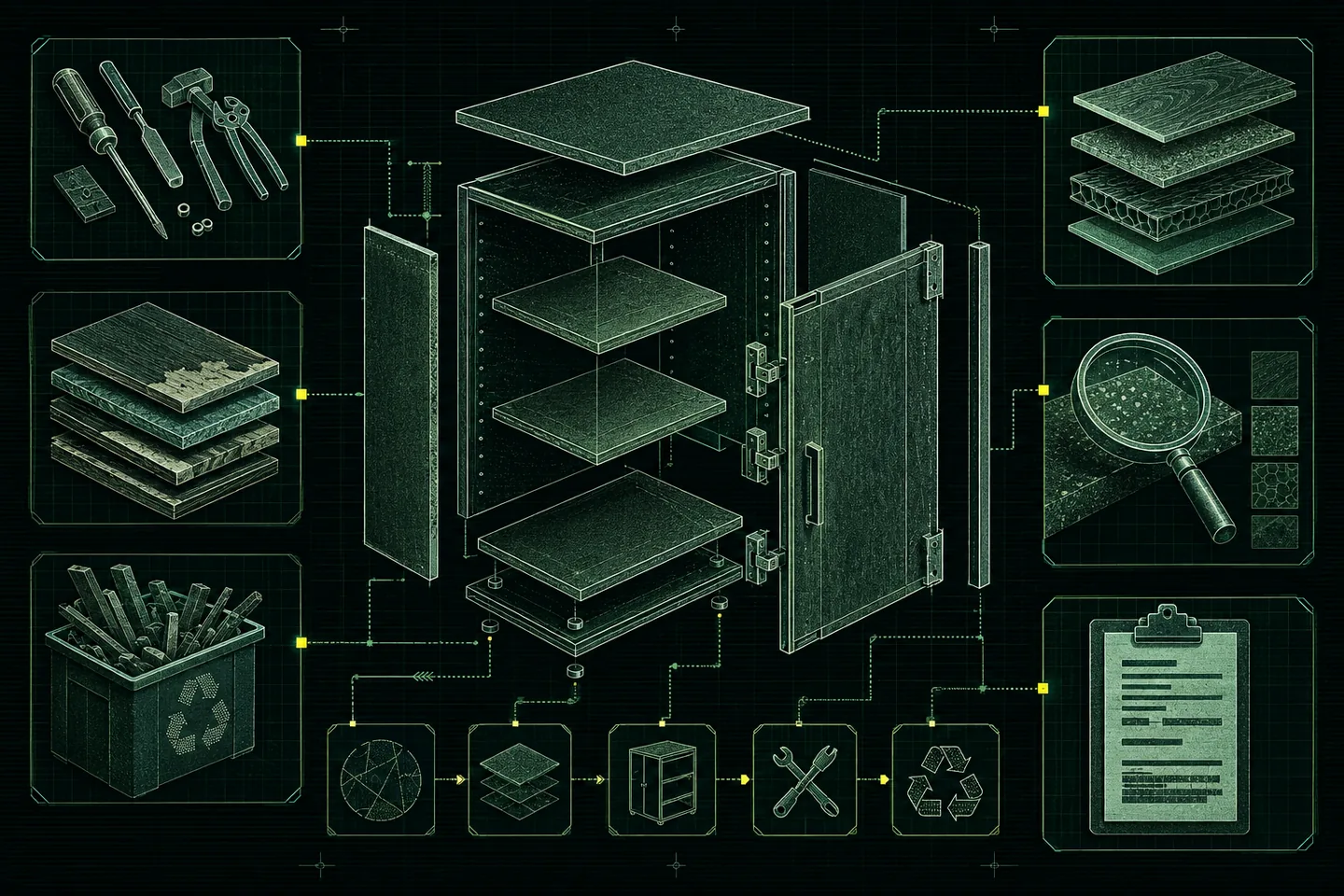
Zero waste careers help prevent waste, extend product life and improve how materials are used. They span design, manufacturing, construction, procurement, education, logistics and operations. Some have environmental job titles; others apply trade, technical or administrative skills to a specific materials problem.
Zero waste work starts before disposal: avoiding unnecessary purchases, maintaining useful products and making repair possible. Recycling handles materials after use; prevention asks why those materials became waste. That distinction helps you judge whether a job changes a process or simply manages its leftovers.
The wider circular economy includes repair, reuse, remanufacturing and recycling. Working conditions and access to training matter alongside environmental outcomes. Read the ILO overview of decent work in the circular economy.
What counts as a zero waste career?
A zero waste career involves decisions that prevent waste or improve material use. The practical question is what you would handle, measure or change each week.
Direct pathways may include waste prevention coordinator, materials recovery specialist, recycling systems manager, composting programme coordinator, reuse-centre manager, repair technician, product stewardship specialist or environmental compliance technician. These roles can involve collection systems, sorting, safe handling, public education, facility operations, reporting or regulatory work.
Design and production roles address waste before manufacture. Designers can reduce components or make products easier to disassemble. Cabinet professionals can plan replaceable parts and repairable finishes. Buyers can assess durability, maintenance and spare parts alongside purchase cost.
Administrative routes include purchasing, facilities management and supply-chain analysis. These jobs can influence stock levels, maintenance schedules and return systems. Communications staff can explain care and repair clearly without exaggerating environmental benefits.
Look beyond the label
Job titles are inconsistent. One employer may advertise a “sustainability coordinator,” while another describes similar work as environmental compliance, resource efficiency, materials management or operations improvement. Search by the problem you want to work on as well as by the word “sustainability.” Useful terms include reuse, repair, materials, circular economy, product stewardship, waste prevention, recycling, organics, sustainable procurement, life-cycle assessment and environmental compliance.
It is also worth examining what a role actually controls. A position may use environmentally positive language but have little authority over purchasing, design or operations. Ask whether the work includes measurable responsibilities such as reducing material use, improving reuse, changing specifications, managing take-back systems, tracking waste streams or training staff.
Career paths worth exploring
Design and the built environment
Design decisions influence waste long before a product reaches a bin. Architects, interior designers, engineers, cabinet designers and construction managers can support durability, modularity, repair and responsible material selection. They may work with clients to retain existing elements, specify components that can be replaced individually or plan spaces that can adapt rather than be rebuilt.
A green-building careers resource covers architecture, engineering, facilities management and interior design. Its career-development guide illustrates how varied sustainability work can be. Use the guide to compare occupations, then check which material decisions each role actually controls.
Operations, procurement and manufacturing
Many waste decisions are operational. Production planners, buyers, quality managers and facilities teams can reduce over-ordering, improve inventory control, increase the use of reclaimed materials or establish procedures for repair and reuse. In manufacturing, process engineers may look for offcuts, defects, packaging and surplus components that can be prevented or redirected.
These roles reward people who can work with both data and people. A spreadsheet may show that a material is being discarded, but changing the process can require cooperation from suppliers, production workers, maintenance teams and customers. Clear documentation, careful measurement and practical communication are often more valuable than broad environmental language.
Environmental monitoring and compliance
Environmental technicians may collect samples, inspect facilities, monitor pollution and maintain records. Work can combine field visits, laboratory analysis and reporting. The Bureau’s occupational profile explains the education, training and practical qualities these roles commonly require. This is a US reference; check local qualification requirements and the safety training specified in each vacancy.
Community programmes, education and policy
Waste prevention depends on participation. Local governments, schools, housing organisations and community groups may need people who can design reuse programmes, explain sorting rules, coordinate repair events, develop procurement guidance or evaluate whether a service is accessible.
Policy roles address purchasing rules, product standards and local infrastructure. Research, clear writing and consultation skills help turn a proposal into a workable service. Community roles also need practical organisation: arranging collections, explaining accepted materials and responding when a scheme confuses its users.
Assess the working conditions
Read beyond the environmental purpose of a vacancy. Check how much time involves site visits, desk work, driving, public contact or physical handling. Ask who provides supervision, how staff raise safety concerns and whether training takes place during working hours. For an operational role, find out who can approve changes to purchasing or equipment: responsibility without decision-making authority can limit what you achieve.
Ask how the team measures results. Tonnes collected do not, by themselves, show that waste was prevented. Useful records distinguish materials avoided, items reused and materials sent for processing. Ask what happens to rejected loads and how destinations are checked.
Skills that travel across the field
You do not need one universal degree to enter zero waste work. The appropriate preparation depends on the role. Technical positions may ask for training in environmental science, engineering, chemistry, construction, occupational safety or data analysis. Design roles may prioritise portfolios and materials knowledge. Community and policy positions may value research, writing, public engagement or programme management.
- Material literacy: Understand where materials come from, how products are made, how they can be maintained and what happens at the end of use.
- Systems thinking: Follow a material through purchasing, delivery, use, repair, return and disposal rather than focusing on one stage.
- Measurement: Keep accurate records and distinguish between prevention, reuse, recycling and disposal.
- Communication: Explain technical choices to suppliers, colleagues, clients, residents or the public.
- Operational judgement: Design procedures that people can realistically follow within time, safety and budget constraints.
- Integrity: State what a project changes, what it does not change and what evidence supports the claim.
Practical next steps
Start by choosing a materials problem rather than a vague career identity. You might care most about construction waste, furniture, food scraps, packaging, electronics, textiles or household reuse. Then identify the organisations in your area that influence that material: manufacturers, repair businesses, local authorities, contractors, non-profit organisations, haulers, laboratories, retailers and community programmes.
Next, read real job descriptions. Make a simple list of repeated requirements, separating essential qualifications from preferred ones. This will show whether your next step is a short course, a portfolio project, a technical credential, volunteer experience or a stronger application that translates existing experience into environmental language.
Translate existing experience into specific examples. Stock control can demonstrate accurate material records; maintenance can show fault diagnosis and product-life extension; customer service can demonstrate explaining unfamiliar procedures. Describe your own contribution, the method used and what you could verify. Avoid presenting a team outcome as solely your achievement.
Create one small piece of evidence. Map the materials used in a project, document a repair, compare two product specifications, design a reuse procedure or analyse a workplace waste stream. Keep the scope modest and describe the limitations. A careful project with transparent assumptions is more useful than a dramatic claim that cannot be checked.